Categories
News

Major Mill upgrade

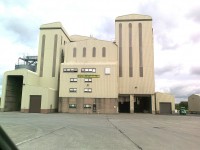
We have just completed a major mill upgrade at our production facility in Castlemahon.

Due to the increasing demand for our feed over the last few years we decided to take the step to further upgrade the Mill to keep us at the leading edge of safe and efficient production.

As we are big advocates of the use of Maize as a feed material we have had to install some new equipment to help increase our pellet quality for our pellet diets which can be up to 40% ground Maize. Large volumes of Maize in diets are very difficult to combine into a nice dust free pellet as Maize has very little pellet binding properties. Thankfully using our experience gained over the last few years with larger and larger volumes of Maize we have developed our Mill to help overcome this.

Thanks to our dedicated staff who have worked tirelessly over the last few weeks in preparation for this upgrade we have also successfully installed a new control system that will further enhance our pellet quality, increase our flexibility during manufacturing along with greater energy efficiencies and enhanced traceability for our feed.

DSL systems who are a world leader in Mill control systems carried out this upgrade in conjunction with our production staff.

Categories
News

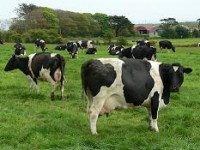
Tips to maximise Mid to late season grass growth

1 ensure a good topping policy. After grazing paddocks should be topped to remove the seed heads.

2. Measure grass on a set day every week. Looking at it from the window of the tractor is not enough it should be walked. If grass supplies are tight consider applying fertiliser to productive swards. It will be uneconomic to spread on poor swards so save the fertiliser for the better swards

3.Increase the grazing rotation. Bringing silage ground back into the grazing platform will help this as grass growth drops off.

4.Higher grass covers respond better to fertiliser in the mid to late season .

5. Use a back fence or movable wire to protect grass regrowth. The grass plant will be very slow to recover if the animals are constantly grazing the regrowth.

6. Wean calves earlier. These animals if weaned early can stocked at a higher rate as ground conditions deteriorate. This will also allow you to house cows earlier to prevent sward damage while leaving lighter animals out grazing for longer.

7. Continue to clean out paddocks as best you can. The target in early to mid season is 4-5 cm. this will increase as ground conditions deteriorate.

Categories
News

WInter Feed Budgeting

While we have had a great summer so far in terms of weather, Teagasc had done a survey that shows that two thirds of farmers will be 23% short of fodder next year. With the recent dry spell and slower grass growth rates this may be difficult to claw back for most farmers so the advice is to plan ahead.

Last year it was the farmers that sat down and planned ahead that managed to get through the spring without fodder shortages. So it is never too early to plan ahead for winter.

The first step is to measure the fodder available on the farm. It is vital to get the average height of the pit right when calculating the total tons of pit silage (length by width by average height). Over or under estimating by a foot can throw the calculation out by 10 to 12 %.

If after your calculations that you find yourself to be one of the two thirds of farmers short of fodder then you have plenty of options if you act early. The earlier you act the better your situation will be.

The common solutions are to:

A. Sell a few animals (selling 10 cull cows will save you 80tons of fodder)

B. Buy in fodder ( straw will be available soon)

C. Feed more concentrates (1kg of concentrate replaces 5kgs of fodder).

You may find a combination of these options will suit you best.

Categories
News

Hay and Straw advice

The promised rain is back again after an unprecedented spell of dry weather.

With ground conditions very dry and grass growth all but halted due to the lack of moisture it is a welcome sight. The additional moisture coupled with the high temperatures should go some way to getting growth levels back to an acceptable level but for all farmers careful grass maintenance is required. Fields that were cut for silage and hay will be that little bit slower to green up.

The recent fine spell has also seen as a great chance to take out paddocks for hay. This hay is for the most part high quality and a welcome addition to the fodder stocks for winter 2014.

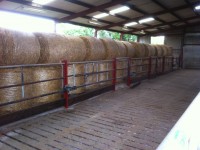
It is a great time to clean out the straw storage on farm and ready the bale trailer also as the grain harvest is well underway in the Midlands and East Cork. The demand for straw is quite high so prices of straw delivered and availability may become an issue.

Talk to your local grain growers about buying straw, there is no point looking for it when it is all gone or paying big money for it in February.


Categories
News

Summer is under way!

Its great to see a spell of weather that we can work around. There has been more high quality silage made to date than there was in the entire 2012 silage season. With the rise in temperatures predicted over the next few days grass growth should take off again shortly.

This has led to its own challenges with a burst of growth when temperatures rise and a slowdown when they fall. This makes grass management tricky and those decisions on when to take out a paddock for silage all the more difficult and important.

The general advice seems to be to keep an eye on the weather temperatures over the 5 to 7 day forecast and make your decisions as best you can from there.

Move as early as you can and get the bales off the land while the weather holds.

Don’t forget to keep an eye on the rest of your enterprise during silage season! The obvious jobs such as feeding cattle and cows, ensuring that feed bins and houses are kept stocked, fencing and repairs should not suffer because the weather is good.

Remember to plan ahead for the next few weeks to make the most of any opportunity that summer weather brings.


Categories
News

Tractor Restoration

For those that have been around our farm in Crecora it would be hard not to have noticed our InterIMG_0279[1]national 674 Loader tractor.

This Tractor was bought new by John O Connell in 1976 . Since then it has proved to be highly adept at handling thousands of straw bales, drawing grain, turning straw and a myriad of other tasks that could be expected of it.

Naturally over the years age and the volume of work has taken its toll on the 674. So we decided after the harvest last year to spend some time and money to restore it to full working order as we expect it to be a working machine for many years yet!


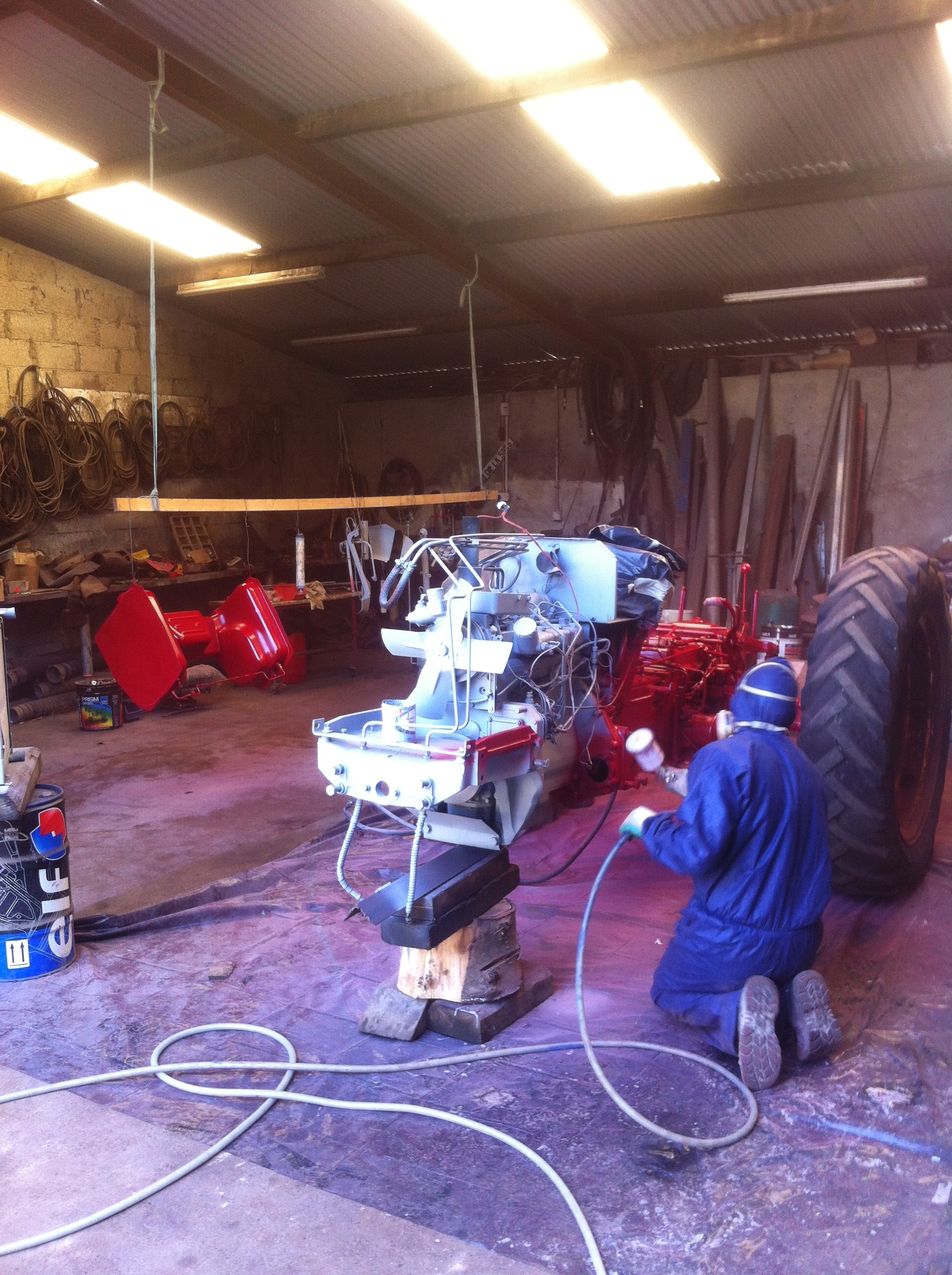
IMG_0812[1]Some of the Bodywork after painting and blasting.


We Stripped the tractor completely, taking of all bodywork electrics and hydraulics. The bodywork needed some panels replaced such as the mudguards and was refurbished and resprayed.

The engine was stripped and given a rebuild including a repair on the timing chain guard which had been leaking oil for some time.

The rear axle got a new set of brake shoes and a new handbrake band.

The hydraulic system was renewed with many leaking hoses and fittings replaced.

We put a new electric loom in it as the old one was giving trouble for some time blowing fuses.

2 new headlights. and mudguard lights.

The cab was sandblasted and painted and 2 new doors and a windscreen frame fitted.

The loader was extensively refurbished including 2 new lift rams and the pivot points machined out and renewed due to excessive wear.

The original wheels were sand blasted and sprayed.

IMG_0912[1]Obviously with the huge effort we put in to keep our customers supplied with feed over the last 6 months the restoration project was very hard to make progress on but now that we have a chance to prepare for harvest 2014 we need the tractor up and running to handle straw bales!


Final spray of the Chassis

So we have started reassembly, hopefully over the next few weeks we can make good progress on finishing this project and for those that are interested I will put up some more information when we make more progress!

Categories
News

Summer is here!

After the last ten days of great weather you could be forgiven for putting the travails of the last 18 months behind you for a while. Grass growth has picked up finally and land is recovering well.

Some key points to bear in mind for the next few weeks.

Grass growth will slow drastically over the next month to 6 weeks. Careful budgeting and planning is vital to manage your grass to maximise silage potential for next winter.

The choice of waiting for the sward to thicken at the expense of Dry matter digestibility quality is your own choice to make and depends on your farming operation.

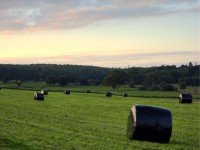
In our own farming operation we have made our first cut pit silage last week. In common with most farmers, we currently do not have enough mouths to keep ahead of the grass so we will take out selected paddocks in the next week or ten days for bales.

These should be very good quality bales and will be stored aside to be fed to finishing cattle when needed.

After the last few years and with the current level of fodder in the country it would seem advisable to take as much potential good quality fodder as you can to avoid or help alleviate a potential fodder shortage next spring.

Think before you cut! Decide on what you want to cut and stick to it. If it means coming back and cutting more in another 2 weeks so be it.

Categories
News

New Employment at John O’Connell Feeds

We are pleased to announce that we have been able to create a new job this month in the Mid west region.

We have taken on a new driver to help with ensuring a top class delivery service to our customers.

Categories
News

“You reap what you sow”

After a very challenging harvest in 2012 following the difficult weather conditions we are all hoping that 2013 will be a lucky year for all Irish Farmers.

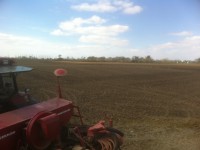
Taking advantage of the dry frosty spell of weather we at John O’Connells have been very busy getting land ready for Spring Barley and Oats.

While the ploughing was completed for the most part in January with a Sanderum 6 furrow semi -mounted plough, the soil reflected the difficult summer and harvesting conditions. Thankfully the frosty weather has helped soften and break up the ploughed ground quite substantially.

Following the first spell picking stones from the ploughed ground the ground was then tilled with a Kuhn power harrow twice and the stones picked again.

We then set the seed using a kongskilde cultivater and seed drill. This does a lovely job of levelling the tilled ground and packing the seed bed.

Heres hoping that we get good growing conditions for a great harvest in 2013!

Categories
News

Feeding the Rumen correctly

We have all been told that the Rumen is vital to a healthy productive animal so here is a quick run down on some interesting points about the Rumen.


The rumen allows the animals to get the majority of their nutrients from forages and other Roughages. Non ruminant animals like ourselves cannot obtain any real nutritional value from most plant sources unless the food has been modified, ground mashed etc.

A ruminant animal has 4 stomachs, the Reticulum, the Rumen, the Omasum and the Abomasum.


The Rumen is the largest part of the digestive system measuring up to 50 gallons and situated on the left hand side of the abdomen.


It is essentially a large fermentation vat where forages are stored, mixed and broken down further by billions of microbes in the Rumen. These microbes help to break down the forage into manageable substances that can be absorbed through the wall of the Rumen and also by creating microbial protein from the forages.


These microbes are vital to getting the most from the food sources and it is vitally important that the rumen ph is kept stable and around the level PH 6. If the PH drops to a more acidic environment due to incorrect nutrition these microbes shut down and die and the food in the Rumen does not get broken down quickly. Thus the animal is full and cannot absorb enough nutrients to produce milk or beef at the levels we need.


When we are formulation our feeds we must keep in mind that our feeds need to:

  1. Keep the Microbes and bugs in the Rumen alive by maintaining a stable PH by using the correct type and amount of cereals such as Wheat, Barley and Maize. These are great feed ingredients which we can get volumes of them into an animal by balancing the formulations correctly. Too much of these in the incorrect order or poor feeding management can cause a drop in PH and acidosis can occur.
  2. We must feed the microbes in the Rumen by providing them with nutrients to allow them to multiply, and carry out their job of converting forages into nutrients that the animal can absorb in the Rumen. Essentially we need to provide them with fuel to do the job for us.
  3. We must also balance the proteins and more importantly the types of proteins in our feeds to ensure that we do not create excess Nitrogen levels in the animal which is toxic to it and which leads to the animal wasting its own energy converting this excess nitrogen into urine and other associated by-products. This process can be extremely wasteful in terms of lost potential energy that the animal could be using to grow or produce milk.
  4. We also formulate our feeds to provide correct levels of bypass protein. These bypass proteins do not get broken down in the rumen. Rather it is absorbed farther on the digestive system in the small intestine. We do this so that when an animal eats its feed that it is not all broken down in an hour or two spent in the rumen and abomasum. We want some of that protein to travel to the small intestine where it can be readily absorbed into the animal’s bloodstream very efficiently. Thus it spreads out the work for the animal to absorb these nutrients throughout the day.


So in short the Rumen is vital to a productive animal and maintaining the rumen at a stable PH and not making big changes to the diet can have huge benefits to the productivity and efficiency of the animal.

Using the latest research findings and our years of experience in Animal Nutrition we formulate all our feeds more maximum Rumen nutrient absorbtion Efficiency. Hence our range of high energy feeds have performed so well over this winter even with poor fodder quality in many farms.


Contact us for more information on our range of balanced high efficiency feeds.

Crecora Mills

Privacy Overview

This website uses cookies so that we can provide you with the best user experience possible. Cookie information is stored in your browser and performs functions such as recognising you when you return to our website and helping our team to understand which sections of the website you find most interesting and useful.