Categories
News

Spring Fodder update

So springtime is nearly upon us and now that Christmas is over its really time to look at what we need to feed our animals till we hope they go out on grass.


We are being hit on both sides with our fodder in that the volume is not there and also the quality is not there after the tough harvesting periods in 2012.


Silage Quality 2013

Results of analysis show that the average DMD ( Dry Matter Digestibility) of silage is a worrying 64% with over 20 % of these samples under 60DMD.

We have all heard of fellow farmers feeding poorly preserved poor quality silage to animals and the worry is that we will all be competing to buy the limited volume of silage left in the country regardless of quality.

There is a feeling of panic among many farmers short on fodder after last years disaterous weather. Indeed the country is alive with bales of questionable silage and straw being transported at very high costs to farmers short on silage. 30 euro per round bale of silage is not unheard of and there is a feeling that as the season continues this could go up to 40 or more per bale.


THERE ARE CHEAPER BETTER VALUE ALTERNATIVES!


If we as farmers are serious about making money from our farm enterprise any purchase of such a magnitude should be very carefully considered.


A 700euro bale of silage costing 30 Euro per bale is costing you 43 euro per ton. Or 4.3 cents per kilo.

1 kilo of good guaranteed quality fodder replacement concentrate will replace 6 kilos of silage. And will cost you around 26 cents per kilo.

As this will replace 6 kilos of good silage it will cost you 4.3 cents per kilo or the same cost as buying “lucky bag” silage! From a business point of view it’s a no brainer. Especially when you factor in the cost of finding looking at, buying, hauling, unloading and handling bales of variable quality.


Do the Maths!!!!

It could save you a fortune in vet bills and loss of body condition and performance.


We can also offer straights at very competitive farmers to those with their own diet wagons and indeed have seen a big demand in these products with many customers feeding high levels of :

  • Citrus      at 6% protein
  • Palm      Kernal at 16.5%,
  • Soya      Hulls at 13%,
  • Beetpulp      at 9%
  • Wheatfeed      at12.5.


It is quite possible and economic to feed high levels of these products with silage if they are managed correctly.


We can help you.


For more advice on this call us on 061 355186.


For prices on fodder replacement products or straights such as Beetpulp, Soya Hulls, Citrus pulp, Wheatfeed, Palm Kernal call us on 061 355186.


As an alternative to buying expensive fodder that may be of little or no value to our expensive high yielding animals I would ask you to consider feeding a guaranteed quality product that can be delivered to your door by a reputable local business.
Categories
News

Breaking News!!! New Cattle Ration


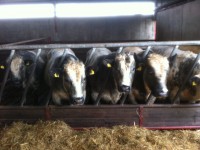
In response to the current fodder crisis and the tough economic times that we as farmer find ourselves in here at O’Connell Mills, we have developed a new low cost ration as an alternative choice for our customers who wish to feed increased levels of feed rather than buying expensive silage.


Our aim with developing this Cattle ration is to provide an alternative to buying expensive silage thereby saving our customers money.


1kg of Cattle ration should substitute 6 kgs of silage so you can stretch the silage that you have to last the spring season.


Unlike buying silage in bales, Cattle ration is a consistent high quality product that you can get delivered to your door when you want it.


There are no hidden costs with feed cattle ration such as the cost of finding, travelling to look at bales, transporting, and unloading, loading and feeding extra bales of silage.


Cattle Ration is a coarse ration containing Rolled Barley, Beet pulp, Distillers, Rapeseed, Soya Hulls, Wheat feed, Palm and minerals.


We want to see our customers save money and make money and this is one way that this can be achieved.


Call us today for a price details in bulk and bags.

Categories
News

How to join the top 1% of Irish Farmers

The Top 1% of Irish farmers


Categories
News

Merry Christmas to All Our Customers

We would like to take the opportunity to wish all our customers a very Merry Christmas and a Happy and Prosperous New Year.

Santa is not the only man busy in the weeks before Christmas and the staff here are working flat out with the Christmas rush.

The stores will be open up to Saturday the 22nd and open again on Friday the 28th and 29th as normal.

Merry Christmas

John O’Connell

Categories
News

How to make up the Fodder shortfall over the winter?

Following on from last weeks article where we figured out how to work out how much silage we have on farm and the likely demand for the silage from our different types of animals, lets look at a few options available to make up any fodder shortfall.

  1. Buy more silage.
  2. Reduce numbers on farm.
  3. Feed Concentrates

Option 1 Buy more Silage.

It appears that most of the good quality silage has been well sold at this stage but it might be still worthwhile if good quality silage came available at the right price.

  •  Silage bought must be stored carefully with no damage to the wrap.
  • Transport can be a major cost.
  • A lot of cash has to be paid out immediately to buy silage.
  • Are all bales going to be of consistent quality or will there be a few “duds” mixed with them?

If the quality is questionable there are plenty of better options for your money.

Option 2 Reduce numbers on farm.

At first glance this seems like a great idea. Reduce numbers means less need for fodder, less animals to mind over winter and a few bob in the back pocket for Christmas.

I always like to remember that with cattle “When you sell, you need to think of the day you buy”. This may not always be strictly true but it is worth remembering that when you sell cattle you will be looking to replace them at some point in the spring.

With so many farmers having reduced numbers it would make sense that there will be a lot of pressure on prices of cattle in spring as some farmers need for lawnmowers arises again. So you could end up paying big money for mediocre cattle in spring.

Option 3. Feed concentrates.

If you are short of Fodder it is worth remembering that 1 kg of concentrate replaces 5 to 6 kilos of silage in an animal. Consider that one ton of concentrate will replace 5 to 6 tons of top quality silage.

  •  Concentrate can be bought as needed so storage should not be a problem.
  • It is consistent throughout the year and what you see is what you get.
  • Animal Health. Weak animals due to hunger can result in costly Vet bills.
  • Animal Performance. If we are looking for good performance in the spring we have to at least maintain the animal over the winter. This will require more than just silage.
  • Cash flow. A modest outlay in feed can save a lot of money against spending a lot on large quantities of silage.
  • Concentrates such as “Silage Enhancer”, and “Fodder Stretch” are available specifically to suit the current fodder crisis at good value prices.

In conclusion there are a few options available to us over the winter, and like most things in life it may be that a combination of each of the three options above may be the wisest move we can make. Buy a bit of silage if we are short of fodder. Sell some animals that will make money now and feed some concentrates to those that we need in good shape next spring.

Categories
News

Fodder Solution update

It has been well documented in the past few months that the quality of silage is well back on average through out the country.  One of the main issues appears to be the low levels of protein.  Now is the time to compensate for lack of protein in silage, with a high protein concentrate and not to be looking back next February or March wondering what went wrong.

Here at O’Connell feeds we have a number of specialized products to over come this problem.

Stock-Gro Ration/Nut     
This is an 18% protein ration or nut, which is also a very high energy product, and has proved to be an excellent feed for weanlings or incalf heifers in order to maximize growth.

Silage Enhancer
This is a 19% protein ration, especially formulated this winter as an excellent value high protein feed to help compensate for the lack of quality in silage.  This product is especially suitable for in-calf, dry cows in order to maintain or improve body-score.

Call us today on 061-355186 to find out more about Stock-Gro and Silage Enhancer.

Categories
News

Help is at hand for the Fodder Crisis!!!

They say that information is power and never has this been more true than today. As the winter season is upon us, forage stocks are critically low and of much lower quality than in previous years. There is a lot of talk about the shortage of fodder and many farmers are panicking into selling cattle and buying very expensive bad quality silage. We at John O’Connell, Crecora Mills would like to help you become informed so you can make the correct decisions for you and your business.

Every farmer is asking them selves the critical question: “What is the right thing to do for forage over the winter?”

We can help you answer that question if you can go through the following help sheet.

The first step is to calculate the amount of Fodder on the farm.

Baled Silage.

Baled Silage usually averages out at 1 bale is 700kg to 800kg equivalent of pit silage.

Obviously if a lot of the bales are soft and contain a lot of water you can count them as 700kg. Good standing, firm and well preserved bales are 800kg.

Pit Silage.

Measure the Pit. The length, multiplied by the Width multiplied by the average height will give you the square footage.

Divide this by 50 to get tons of silage in the pit.

Add the baled silage and the pit silage together and we know what we have on farm currently.

So now we know how much Silage we have on farm. You can use the following convenient table to work out how much fodder you will need over the winter.

Animal Type No of Stock Winter Months Tonnes needed per month Total needed for winter
Dairy Cows  1.6
Suckler Cows  1.4
In Calf Heifers  1.3
Weanlings  0.7
Store Cattle  1.3
No of stock multiplied by No of winter months Multiplied by Tonnes needed Equals tons needed for winter

Using the total Silage on farm that we worked out and the total needed we can see if there is a shortfall of fodder and then we can work out how much is needed to make up the difference.

Categories
News

Traceability

In today’s world we often hear about traceability in Food and how important it is.

As part of Irish agricultures constant improvement and search for excellence we have a major role to play in ensuring traceability through the Animal Feed part of the Food Chain. Here at John O’Connell’s when we are manufacturing feed we have to be able to trace our raw materials from the source that we get them from, to our manufacturing facilities and track them all the way to the farmer that feeds them to his or her animals.

How do we carry out this huge logistical task?

Firstly we use only Approved suppliers of raw materials that are inspected by the Department of Food and Fisheries periodically. These raw materials are transported by approved hauliers who can document what they carried in the trailer in the past.

When a load arrives at the mill it has already been sampled by and approved by the Department at source but again we sample it and send the samples of for analysis to determine any possible presence of mycotoxins etc and to guarantee the protein, oil and fibre content etc is as it should be.

This load is then put into an empty bin that has been cleaned and inspected as being clean beforehand. We then use this load of raw materials to manufacture feed till the bin empties. The bin is cleaned, inspected and ready for the next load. When feed is manufactured, a sample of each batch is checked and kept and tested for protein, oil and fibre levels to ensure quality and feed safety.

Again when the feed is loaded into the truck it is sampled, checked and documentation produced and filed. At all stages we must be able to stand up to the rigours of regular Department of Agriculture Audits and Inspections that occur unannounced. Over the past 30 years we have always been compliant in these audits and have often been singled out in the reports for having clean efficient manufacturing and storage facilities.

All in all it is an intensive process to guarantee that feed can be certified as safe but one that is vital for Ireland to remain to be held in High Esteem among European and Worldwide food consumers.

Categories
News

Dairy Cows and Body score over the Winter

With winter well and truly upon us this year. Many Farmers efforts and continuing milking have hit a wall and the tough decision to dry off has to be made. Those lucky enough to have some good silage are still managing to continue on milking by feeding high protein feeds.

With no quota issue likely next spring it is important that we hit the ground running to maximise milk yield as early as possible.

The key to a successful spring is of course getting through the calving season as safely and painlessly as possible to get the cows back into the parlour and making money.

Over the last few years many of our farmers have found that feeding in calf cows over the winter and maintaining them in good condition can pay back very quickly in the spring.

Body condition is vital if a cow is going to be in a position to mobilise body fat to:

  1. Produce a strong healthy calf that has a good balance of vitamins and minerals in their immune system to fight off infection.
  2. Be strong and in good health herself to reduce stressing on her body at calving.
  3. Get back in the parlour as quickly as possible and in good condition to produce good yields of milk.
  4. Be ready for breeding to ensure a nice compact calving pattern for next year.

With this in mind it is important to remember to watch body condition over the next few months especially when feeding silage that may not be as good as you have used in the past.

If silage is not up to scratch and cows body score start falling away, it will cost a lot of money in feed to stop this and then recover your lost body score.

It is far more economic to bridge the energy gap in her diet with modest amounts of concentrate feed regularly along with providing the unborn calf with a balanced source of minerals and vitamins.

Categories
News

Welcome to our new site!

Thank you for taking the time to visit our new site. We are really excited about it! We will be updating it regularly with news and information about all things agriculture related.

Crecora Mills

Privacy Overview

This website uses cookies so that we can provide you with the best user experience possible. Cookie information is stored in your browser and performs functions such as recognising you when you return to our website and helping our team to understand which sections of the website you find most interesting and useful.