Categories
News

New Transport Upgrade

With increased demand for our feedstuffs over the last few years and as further commitment to operating a top quality reliable transport system, we have taken delivery of a new DAF CF tractor unit supplied by McAuiliffes Kerry Truck sales in Castleisland.

It is fitted with the latest clean engine emmisions technology to be the cleanest most efficient solution to powering a modern reliable truck.

With new  strict legislation on truck weights and strict enforcement of driver hours we feel that is it vital to provide our customers with reliable forms of transporting our feed. After all the last thing our customers want to hear is that the delivery they are waiting for is delayed because of a breakdown.


Categories
News

Grazing Options in 2013

What are our Grazing options in 2013?


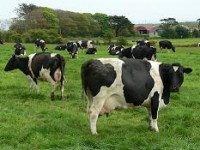
Now that we can be planning to get cows out on grass what are our options to boost profits in 2013?


Here at John O’Connell feeds we have been working hard to formulate a new range of feed for cows at grass to maximise the cow’s potential milk yield.


The nutritional needs of cows on grass differ from the needs of cows in housing and on silage.

When we are using silage as the main source of feed we need to supplement the diet with energy, digestible protein, digestible fibre and a balanced mineral intake to fill the cow’s nutritional needs for calving and fertility.


With cows on good quality leafy grass their protein needs should be largely met by the grass. Teagasc maintain it is possible to get a high quality 3 to 4 year old cow to take in 18 to 20 kilos of Dry matter through grass alone but this is in ideal conditions and on ideal grass. They are totally correct using grass to boost the DM intake has huge positive effects on Milk Yield and Animal Health. Unfortunately in Ireland with our weather conditions this is all too often not viable using grass alone.


The key to maximising the yield of our cows at grass is in getting this DM intake up. How do we do this?

  1. We feed very high quality leafy grass.
  2. Do not force to graze very tight or restrict cow’s intake.


This is fine in theory but in practice is very difficult to achieve. If you are grazing very tight some cows will be hungry coming into the parlour and milk yield will drop. If you don’t graze tight then the grass will become stemmy for the next rotation!

In poor grazing conditions wet grass plays havoc with the digestive process leading to loose cows and a wasted intake.

At some stage we will have to graze grass that is not ideal or make up a shortfall of grass due to fertiliser restrictions.

Another problem is feeding high levels of Barley or Wheat at grass can cause cows to cut their DM intake through grass as Barley and Wheat have a high substitution rate. That is feeding large amounts of Barley in the diet through straight Barley or Crimped grain the cow will not be able to take in as much grass as she will be digesting the Barley.

At some stage we will be forcing cows to graze down grass to very low levels and this stemmy material will not be of much nutritional benefit to cows. It will be harder to digest and stay in the rumen for long periods as it is being broken down. Obviously while this material is in the rumen there is very little room for anything else such as high quality leafy grass.


The Key is Boosting the dry matter intake!!


Here at John O’Connell Feeds we are well aware of these problems and have come up with several options for our customers to solve these problems and maximise returns from the cow.

We have formulated some new feeds that are high in good quality digestible fibre to help the cow intake more and increase milk yield for economical returns.


Dairy Maize2Graze nut


This is a new product specially formulated for 2013,

It is designed for high yielding cows on good quality grass and in good grazing conditions. It contains 30% Maize and a high level of digestible fibre to boost dry matter intake from raw materials such as Maize, Beet pulp, Soya Hulls, Rapeseed, Barley etc. With the protein coming from Grass in the diet this feed has been formulated at 14% protein to boost the milk yield through helping to increase the Dry Matter intake.


Dairy MaxGrass nut


This is a slightly more economical option to achieve a similar desired Dry Matter intake boost in the cow’s diet. Containing raw materials that are high in Digestible fibre feeding a relatively small quantity of this will boost the DM intake and give a higher milk yield at a low cost. It contains Beet pulp, Soya Hulls, Barley etc.


Feeding your cows modest levels of our high digestible fibre feed should result in higher DM intakes, higher milk yields, healthier cows through balanced mineral intake and easier milking.

Categories
News

Mind your back this Spring!!

Springtime is a very busy time for farmers with cows calving, fertiliser being spread and a lot of farm activity happening when the weather allows.

This is a time when we all can over do things and end up with back problems.

The key to avoiding these very painful problems lies in a few simple steps.

Take your time! Avoid jumping out of tractors and machinery as this puts huge stress on your skeletal load bearing muscles and can often lead to slips and falls.

Plan your jobs. Plan your jobs that may involve heavy lifting so that you can get a helping hand if possible. It may be that you have a neighbour that will be doing the same job as you in the next few days so ask for a hand! A problem shared is a job halved!

If you are getting pallets of fertiliser delivered ask the delivery man to leave the new pallet on bit of high ground or on top of a few pallets where you will not have to bend down too far to remove the last few bags. Use big bags and a loader if at all possible.

If you only have one tractor many farmers make a steel bracket to hang the 500kg bags from with the loader and then back the spreader underneath.

Clear the yard of obstacles such as pallets,old bags and old unused equipment to minimise the risk of tripping and falling.

Categories
News

New Pelleting equipment upgrade

We are delighted to announce that we have upgraded our pelleting process to handle increased high cereal formulations.

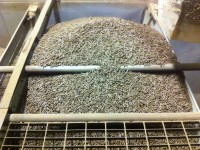
As further proof of our commitment to using only the best raw materials in our feeds we have successfully trialled and fitted some new equipment to pellet high cereal diets such as those with large quantities of Maize.

It is in the industry that it is normally quite difficult to make dust free pellets from products with high levels of Maize. After careful planning and investment we are delighted to be able to say that we have made huge progress in this area to the point where diets such as our Hi Maize Beef Finisher nut, and DairyMax18 nuts are among the best results in pellet durability tests.

Trials with this has resulted in higher quality pellets being produced that will travel well in our customers bins and augers.

Call us for an order on 061 355186


Categories
News

Early Calving Report 2013


The early signs of Calving 2013 have again highlighted many issues with cows at calving. Calving has barely started but some herds are experiencing significant problems. Cows are calving down both thin and worst of all weak.


At the moment knackeries are reporting a huge increase in business. One such company told us that in 2012 they were doing maybe 5 to 6 loads a week, in 2013 so far they are flat out doing 15 to 20 loads a week. It is a frightening scenario.


Here at John O’Connell Feeds we want our customers to be successful first and foremost. Our goal is to help our customers maximise their profits through animal nutrition and performance.

We are not trying to put a hard sell on feed rather we are trying to highlight the huge energy gap in the diet of a cow on silage in 2013 versus a cow on silage in years where they have had better quality silage. A few kilos of feed to a cow before calving will not make or break our business but we believe it could be a huge benefit to our customers.


While many farmers fed cows in the early stages of the dry cow period there is a reluctance to feed as they get closer to calving. Some farmers have had to buy expensive silage from a variety of sources so testing silage is difficult. In some instances silage quality is highly overestimated.

This lower quality silage has a vastly lower nutritional value and energy value than silage that was fed in 2012, so feeding at 2012 levels with poor silage is just not working, leading to thin cows and worst of all weak cows at calving.


Energy demand increases significantly in the 7th to 9th month of pregnancy by 30% and at the same time the cow’s capacity to intake is reduced. As an animal already under pressure throw in a hand grenade of poor quality silage and it is playing havoc with cow health leading to high mortality rates and serious problems at calving.


The consequences of not feeding in 2013


  • Cows which have a low body condition score produce less milk and fewer solids.
  • Cows which are thin at calving have poorer fertility.
  • Thin cows have reduced immunity and high risk of retained placenta so will cost more in vet bills.
  • Higher risk of metabolic diseases such as milk fever, displaced abomasums, and poor feed intake after calving.


The general advice for farmers is to supplement silage for all cows on less than ideal silage quality.

Look at feeding 2-3 kgs minimum on a 64DMD silage rising to 3-4 kgs minimum on a 60 dmd silage before calving regardless of body condition.


All years being equal most farmers would get away with feeding minimal amounts of feed pre calving but learning from previous experiences in poor fodder years we would urge you to consider bridging the energy gap for your cows at calving.

Call us for help and more details.

Categories
News

Calving tips 2013

Calving Tips 2013


As we all now cows who struggle with health problems at calving are on the back foot in terms of Milk Production from the start.


Health problems such as assisted calving, retained placentas can have serious knock on effects down the road in terms of Milk Production and vet bills.


Here are some handy tips to remember to minimise potential health problems.

  1. Remember to document health problems with cows, when you are in the thick of it can be difficult to remember in two or three weeks time which cow had what problems. If you record it you can see if certain cows are prone to problems over successive calving.
  2. Calf cows in a clean environment. Keep in mind that during contractions a cow will take in any dirty contaminated air into her womb and this can cause serious health problems. Good clean Straw may be expensive this year and a bit of work but it is vastly cheaper than an empty cow.
  3. Try to watch High risk calving or calving which is likely to be long duration.
  4. Make sure cows that are due to calf are separated from the herd in plenty of  time. The risk of her and her calf getting hurt during calving is exponentially greater if they are in a herd of others.
  5. If you are assisting at calving make sure that you are clean. It may sound obvious but its worth remembering that the risk of a cow contracting infection goes up a hundred fold if you don’t use arm length gloves when assisting at calving.
  6. Establish a routine after calving to clean equipment and have it ready to go for the next calving. Don’t wait till the next calving to start cleaning the ropes and equipment.

Stop and take a breath. This is experience from a hundred years ago that has been handed down and is still is relevant today. All too often we can fall into the temptation of jumping in all guns blazing to assist at a calving, especially if a cow is in distress. Cows like humans can tell a mile away if you are panicky or in bad humour and they will react to it. Stop and take a breath, if you are talking to someone talk in measured tones and take the time to think about what you are doing.

Categories
News

Emphasis on High quality feeds

This spring many chickens have come home to roost. The poor quality forage that most farmers were forced to make last summer is causing serious trouble with many farmers.

With silage samples coming in with as low as 58DMD and 8% protein this is having a very negative effect on animals body score and energy needs. Even if this in plentiful supply this will have serious financial implications over the next few months.

Firstly the loss of body condition will cost a lot of money in terms of Compound feed to get it back to where it was let alone improve it. Waiting to go out to grass to finish cattle could add up to 6 months on to their finishing time. This is time you could be spending with the next batch of animals making you more money!

It is 5 times more expensive to get back body condition rather than maintain it!

A cows milk yield for the year is set from the condition she is in calving down. If she calves down weak and thin she will not produce anywhere near her potential milk yield over the year despite heavy feeding.

So the consequences of Thin cows are as follows, they will be slower to go in calf, have more health problems and have smaller milk yields.

The emphasis has to be on feeding all animals good quality, high energy feed and here at John O’Connell Feeds we have plenty of options for all farming enterprises.

For the Dairy Farmer

We have a range of high quality Superflow Dairy nuts and rations. These have good UFL values and also high PDIE energy values.

For a step beyond this we have DairyMax18% protein with mostly Maize and other high quality, high ufl ingredients including yeast to aid digestion and feed conversion.

For those in need of High protein dairy feed we have a DairyExcel20% protein feed with mostly Maize and other ingredients such as distillers, soya, rapeseed etc. This also comes with yeast to aid digestion and feed conversion.

For the Beef Farmer

We have a high energy Beef 16% protein ration and nut with mostly Barley and other high quality ingredients. This has proven to be hugely popular this year at a competitive price.

Beef HiMaize finisher nut and ration. this finisher ration has been very popular over the years and with mostly maize and other cereals in the feed it works very well for animals on good silage.

Beef elite Finisher. A great product to finish cattle with that we are very proud of. This has an even higher level of maize and barley, it also contains yeast and a rumen buffer to aid feed conversion.

In Summary, we know the problems of energy deficits in silage are all over the country but there are solutions rather than watching your investment in time and money in the previous year fall away. We can help you minimise the body losses and get back to high performing anaimals as fast as possible. Call us on 061 355186 for more information.


Categories
News

DairyExcel 20% nut

DairyExcel 2o is a no holds barred top quality feed.

As the name suggests it has been formulated to be high in digestible protein, high in digestible energy, have a high PDIE value and a high UFL 0.95.

This has proven to be a very effective feed for cows who require a high level of protein and energy to perform at their highest.

It also contains megalac to provide further energy and to help keep cow condition along with a mineral pack to help cover the cows metabolism coming up to breeding.

Call us on 061 355186 for price details.

Categories
News

New DairyMax 18% nut


New this spring to John O’Connell feeds is our DairyMax 18% protein nut.


What is new about this Product?


With a scarcity of fodder in evidence all over the country and with a lot of farmers forced to feed poorer quality fodder over the last few months there has been a huge demand for a Dairy nut with a high percentage of Maize yet that still has a high percentage of digestible protein.

DairyMax 18% has been formulated to provide that step above the ever popular Superflo 18% nut in terms of digestible energy content and a slightly higher UFL value.

Following our motto of “only mixing with the best” the ingredients of DairyMax18% are Maize, Wheatfeed, Rapeseed,  Hipro Soya, Barley, Distillers, Beetpulp, Soya Hulls, Palm, Calcined Magnesite and a high quality Mineral pack.

Given the tough winter that many cows have had we are asking her to perform three huge energy requiring tasks that we must provide the fuel for in terms of Animal Nutrition. We want our cows to:

  1. Carry a calf to full term and calve down a healthy, valuable calf.
  2. Get back into the parlour after calving as soon as possible
  3. Get her body in a condition to go back in calf easily and fast to keep a compact calving pattern.

We have formulated DairyMax 18% with a PDIE level of 130grms per kilo. This is a very high level of digestible energy that will provide the fuel for a cow to survive and thrive over the next few months.

Categories
News

Bulk Bags Take Off!

Bulk Bags of animal feed are available for collection from our stores.

These are supplied in minibulk bags weighing from 600 to 800 kgs depending on the product.

These are available at great value prices and are ideal for those farmers who cannot take a bulk delivery.

Some restrictions apply in that these bags are collected from the stores only and if you are interested in collecting some feed in Bulk Bags from our depots please call the store to order. These bags are made to order so a minimum of a days notice is required.

Call us for more details.

Crecora Mills

Privacy Overview

This website uses cookies so that we can provide you with the best user experience possible. Cookie information is stored in your browser and performs functions such as recognising you when you return to our website and helping our team to understand which sections of the website you find most interesting and useful.