Categories
News

Your Calves Are Valuable Stock — Feed Them Like It!

🐮 Your Calves Are Valuable Stock — Feed Them Like It

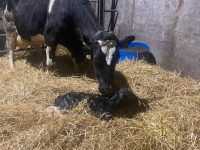
Irish calves have never been more valuable. Whether they’re staying on the farm or heading into the beef system, their future performance is decided in the first few weeks of life.

Milk alone isn’t enough.

Early introduction of a high-quality calf nut is what drives rumen development, growth, and long-term efficiency. That’s where Crecora Mills Calf Max comes in.

Why feeding Calf Max matters:

✔️ Encourages early rumen development
✔️ Supports stronger, healthier calves
✔️ Helps calves transition off milk sooner and smoother
✔️ Drives better liveweight gain
✔️ Sets calves up for stronger lifetime performance

The biggest mistake we see is underfeeding or delaying meal because calves “look fine.”
By the time problems show, performance is already lost — and it’s rarely recovered fully later.

A good calf nut isn’t a cost.
It’s an investment in future output, whether that’s:

  • higher beef value

  • stronger replacement heifers

  • or healthier calves with fewer setbacks

Calf Max is formulated for:

  • Palatability (calves actually eat it)

  • Digestibility

  • Consistency — bag after bag

📞 Talk to Crecora Mills today about feeding Calf Max to your calves.

Crecora Mills – We only mix with the best.

Categories
News

Rumen Upset & Acidosis: Why Beef Cattle Suddenly Stop Thriving

Rumen Upset & Acidosis: Why Beef Cattle Suddenly Stop Thriving

If cattle are eating but not gaining, or performance drops off quickly after a ration change, the problem often sits in one place:

The rumen.

In Irish beef systems, rumen upset and sub-clinical acidosis are far more common than most realise — especially during finishing or after turnout to strong spring grass.


The Rumen: Your Real Feed Engine

The rumen is a fermentation chamber packed with billions of microbes. These microbes break down fibre and starch into usable energy.

When the rumen is stable:

  • Intake stays strong

  • Feed converts efficiently

  • Daily liveweight gain stays consistent

When the rumen is unstable:

  • Intake fluctuates

  • Dung loosens or becomes inconsistent

  • Thrive disappears

And once rumen bugs are knocked back, performance doesn’t recover overnight.


What Causes Acidosis?

Acidosis happens when rumen pH drops too low due to rapid fermentation of starch or sugars.

Common triggers on Irish farms include:

  • Sudden introduction of high levels of barley

  • Pushing concentrates too quickly in finishing cattle

  • Inconsistent feeding times

  • Sudden turnout onto lush, leafy grass

  • Feeding large amounts of straights without proper balance

Barley ferments fast. If it’s increased too quickly, acid builds up faster than the rumen can buffer it.

Even when cattle don’t show obvious illness, sub-clinical acidosis quietly reduces performance.


Signs You Might Be Missing

Not every case is dramatic. Watch for:

  • Cattle going off feed for a day or two

  • Loose, bubbly dung

  • Reduced cud chewing

  • Lameness in severe cases

  • Cattle that “stall” during finishing

If daily gain drops from 1.4 kg to 0.9 kg, the cost builds quickly.


Why It’s So Expensive

When rumen pH drops:

  • Fibre digestion falls

  • Feed efficiency collapses

  • Cattle burn energy dealing with inflammation

You end up feeding more to get less.

No ration can perform if the rumen environment is unstable.


Practical Prevention That Works

Acidosis is largely a management issue.

Key rules:

  1. Introduce ration changes gradually — over weeks, not days.

  2. Increase concentrate levels in small, steady steps.

  3. Keep feeding times consistent.

  4. Always provide access to clean water.

  5. Ensure adequate fibre, even in finishing systems.

Consistency beats pushing cattle too hard.


Nutrition Done Properly

Balanced rations reduce risk by combining:

  • Fast-release energy

  • Slower-release starch sources

  • Digestible fibre

  • Rumen buffers

  • Live yeast where appropriate

At Crecora Mills, rations are formulated to support rumen stability first — because performance only comes after digestion is right.

You cannot out-feed a damaged rumen.


The Take-Home Message

If cattle stop thriving after a diet change, don’t blame genetics or weather straight away.

Look at:

  • Rate of feed increase

  • Starch levels

  • Feeding consistency

Protect the rumen and performance will follow.

Categories
News

Freshly Calved Cows: Why Cutting Nuts Is a False Economy

The first 30–60 days after calving are the most important days of the cow’s entire lactation.
Get nutrition right here, and everything that follows is easier. Get it wrong, and you’re chasing problems for months.

When a cow calves, her energy demand jumps overnight. Milk output rises faster than intake, leaving her in negative energy balance. Grass and silage alone — no matter how good — often can’t meet that demand.

That’s where dairy nuts earn their keep.

Why feeding nuts after calving matters:

✔️ Supports milk yield early, when response to feed is strongest
✔️ Helps protect body condition, fertility, and cow health
✔️ Drives milk solids, not just litres
✔️ Reduces risk of issues like ketosis and poor recovery
✔️ Sets the cow up for a more consistent lactation

The biggest mistake we see is cutting nuts too hard, too early, especially when milk price is under pressure.
Saving €0.50–€1.00 per cow per day can easily cost 2–4 litres of milk, plus fertility headaches later on.

The truth is simple:
👉 Fresh cows are not the place to cut corners.
👉 The right nut, fed at the right level, pays for itself — even at lower milk prices.

At Crecora Mills, our dairy nuts are formulated to deliver energy density, digestibility, and consistency when cows need it most.

📞 Talk to us about the right feeding level for freshly calved cows.

Crecora Mills – We only mix with the best.

Categories
News

Making the Most of Milk Prices: Why Feeding Crecora Mills Dairy Nuts Pays Off

Making the Most of Milk Prices: Why Feeding Crecora Mills Dairy Nuts Pays Off

In the next few months, every litre of milk counts. With milk prices under pressure (several co-ops have cut their price per litre recently) Agriland+2Irish Examiner+2, dairy farmers need to look closer than ever at the margins. One of the smartest places to protect margin is in feed — because good feeding pays back in extra litres, better components, improved health, and longevity.

Feeding a premium product like Crecora Mills Dairy Nuts is more than expense — it’s an investment. Here’s how the financials stack up:


1. Increased Milk Yield per Cow

A better energy–protein balance leads to higher milk output. Suppose switching cows (or blending part of the diet) to Dairy Nuts yields even 0.5 to 1.0 L extra per cow per day (a conservative estimate in many well-formulated trials).

  • Over a 150-day lactation window, that’s 75 to 150 extra litres per cow.

  • If milk price is ~ 48 c/L (including bonuses, etc.) (recent quoted rates are around this ballpark) Irish Examiner+2Irish Examiner+2, that’s €36 to €72 extra income per cow from yield alone.

  • On a 100-cow herd, that becomes €3,600 to €7,200 additional revenue in that period.

Even if the real gain is half that, it still gives you a buffer when prices drop.


2. Better Milk Components & Quality Bonuses

Higher quality feed helps push up butterfat and protein, lower somatic cell counts, and fewer milk quality penalties. Many co-ops offer bonuses for low SCC or sustainability/quality payments Agriland+2ICMSA+2.

Improving components by even 0.05–0.10% on a large volume can translate into extra cents per litre. That bonus money helps offset feed cost risk.


3. Health, Fertility & Longevity Savings

Feeding a more consistent, balanced ration reduces metabolic stress, lowers incidence of mastitis, acidosis, and other disorders. Fewer vet bills, less milk discarded, lower culling rates — all of these reduce costs.

Better fertility means cows get back in calf quicker, fewer dry days, and longer productive lives. The net effect is lower replacement costs over the years ScienceDirect+3Teagasc+3researchrepository.universityofgalway.ie+3.


4. Feed Efficiency & Cost per Litre

Premium nuts may cost more per tonne than basic rations, but the cost per litre of milk produced is the real metric. If Dairy Nuts push your feed conversion (kg feed needed per litre) lower, your effective cost per litre falls.

You might be willing to pay, say, €20–30 more per tonne if you end up producing 5–10% more milk per cow — depending on your scale, that extra milk covers the higher feed cost plus something in your pocket.


5. Risk Mitigation in a Falling Milk Price Environment

Milk prices are trending downward in some regions (recent reductions by co-ops) Agriland+1. If you rely on a low-cost, lower-performing diet, a price drop hits you harder. But with a higher-yield, higher-quality herd, your margin cushion is bigger.

In other words: when milk price falls, a high-performing cow offsets more of the revenue shock than a low-producing one.


Sample Financial Illustration (Hypothetical)

Metric Base Diet With Dairy Nuts (Hypothesis)
Milk yield per cow/day 25 L 25.8 L (+0.8 L)
Days in lactation measured 150 150
Extra milk per cow — 120 L extra
Price per litre €0.48 €0.48
Extra revenue per cow — €57.60
Herd size 80 cows 80 cows
Total extra revenue — €4,608
Extra feed cost (nut premium) — €1,200 (approx)
Net gain — €3,400+

This is a simplified illustration; your actual numbers depend on herd size, feed cost differential, and realized yield gains. The point is the upside is significant — enough to make the premium worthwhile.


What To Watch / Manage

  • Monitor feed costs closely and compare to revenue gain.

  • Track milk components & bonuses to see if quality improves.

  • Keep a close eye on health and fertility metrics.

  • Be cautious with overfeeding or imbalance — always feed a balanced ration.

  • Ensure your feeding system keeps consistency — you don’t want waste or mismatch.


Bottom Line

Feeding Crecora Mills Dairy Nuts is not just a cost — it’s a lever to enhance output, push quality, reduce health losses, and better absorb milk price volatility. In an environment where milk price is no longer guaranteed to rise, those extra litres, bonuses, and risk buffers can make the difference between scraping a profit and making real gains.

Categories
News

Low Milk Price Case Study

Final_O'Connell's Crecora Mills_Logo

Here at Crecora Mills we are getting lots of questions on farms as to what dairy farmers options are at the moment.

Lets look at an average Case study of a Herd of 100 cows.

We will assume that calving will be starting in early January and running on into late March.

Option 1. Dry off all cows on November 1st

Option 2 Dry off all cows in December 1st

Option 3 Dry off the 60 cows on December 1st that will calve early and keep 40 late calving cows milking till Jan.

Option 1 Dry off all cows on November 1st.

Note: Zero dairy income after November.

“Sure there is no point milking on at this level is there?”

“I’ve never done it before because I was always over quota”.

The advantages:

  • A little less work although he will still have to feed silage, clean out sheds and all other farm work etc.
  • He is sick of being paid a low milk price all year and wants to throw his hat at it. All the neighbours are talking about drying off, doom and gloom prevail.

The disadvantages:

  • The Milk cheque stops coming in.
  • Reduced Cashflow.
  • Some cows facing into a 4 month dry period that will result in fat cows and difficult calving and Vet bills.
  • They will still have to be fed and looked after.

Option 2 Dry off all cows on December 1st.

” I need a break from Milking”

“Sure it wont pay me to keep milking now on small volumes.”

Assuming cows milking only 14 litres at high milk solids probably 30 cent per litre. 100 cows will milk €12,600 worth of milk. Assuming a feed level of high quality Crecora Mills feed at 5kg per cow for the month of November at €250 euro per ton( or less depending on what feed you select from Crecora Mills) means it will cost €3,750 in feed.

That’s a Minimum profit in 30 days of €8,850 over farmer who dried off in November. (He could well afford to get a relief milker in for November if he needed a break)

The advantages:

  •  The farmer gets a 2 month break from milking but all other farm work has to be done.
  • The cows that are due to calve early will be dried off in good body condition

The disadvantages:

  • Reduced cashflow as the milk cheque stops coming in after December.
  • Some cows will not be due to calve till March get a 4 month dry period
  • Fat later calving cows will be almost guaranteed to cause expensive problems at calving.
  • Cows still have to be fed silage and minerals.

Option 3 Dry off 60 Early calvers in December and keep late calving cows milking till January

“The milk cheque might be small but it is keeping the whole show going”

“Sure I have to be out working on the farm anyway I may as well milk along a few cows”

Disadvantages:

  • A little extra farm work, although he will still be feeding them silage. Cows have to be milked ( you could get a Farm relief milker)

Advantages.

  • Early calving cows get a decent dry period but not too long.
  • 40 Late calving cows will be on high solids and should leave at least €3500 profit after concentrate feed costs.
  • 40 late calving cows will go into calving with a shorter dry period and should be in better body condition.

These 40 cows should milk 13 litres at high milk solids (30 cent/litre) if they have been looked after all year. 40 cows in December will produce €4,836 worth of milk on 6.2 kgs of Crecora Mills feed at 5kgs feeding rate. That’s a maximum feed cost of €1550 (assuming €250 euro per ton depending on which of our feeds are used it may be considerably less) Profit from those 40 cows alone for December will be €3286 euro. The farmer could surely get a relief milker in for December to milk 40 cows if he/she needed a break from milking.

Interestingly the profit difference between the Farmer that dries off in November and the farmer that the 40 cows going till January is €12,136 for 2 months work. I know i would milk cows twice a day for that kind of money! The other often forgotten but arguably more important advantages are that the farmer can control and manage body condition better in the parlour. Less fat cows has a hugely positive effect on:

  • The ease of calving

  • Subsequent milk yield

  • Subsequent milk volume

  • Reproduction

  • Cow health

All massively crucial milestones in cow nutrition and health.

Remember to only “Mix with the Best” and use Crecora Mills Feed.

Crecora Mills

Privacy Overview

This website uses cookies so that we can provide you with the best user experience possible. Cookie information is stored in your browser and performs functions such as recognising you when you return to our website and helping our team to understand which sections of the website you find most interesting and useful.